
How to Reduce PDF File Size Online for Free (With Quality Controls)
Reduce a PDF in the browser, understand what may change, and check the downloaded copy before you send it.
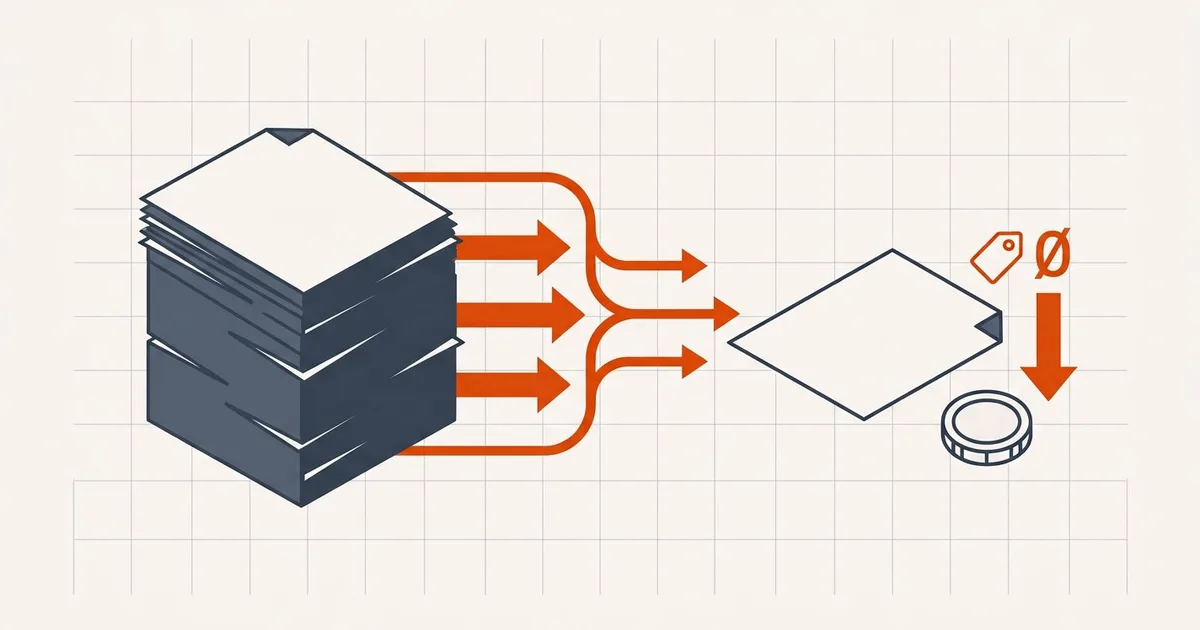
A useful compression workflow starts with the recipient, not with a dramatic percentage. Find the actual upload or attachment requirement, make a separate working copy, choose the least aggressive mode that meets the need, and inspect what came out.
Before you compress
Read the recipient's current instructions. A portal can reject a file because of its size, format, encryption, filename, page dimensions, signature state, or validation rules. Making the file smaller solves only the size part. If you do not yet know the limit you are aiming for, PDF attachment size limits by destination lists the email, messaging, and visa-portal figures with their sources.
- Keep the source PDF unchanged.
- Confirm the actual limit instead of relying on an old table or screenshot.
- Decide which details must remain readable: fine print, stamps, handwriting, photographs, charts, or QR codes.
- Do not rewrite a digitally signed file. BytesPDF rejects PDFs with a detected signature ByteRange.
How much room is actually in your file
Nobody can promise a percentage without inspecting the file, and anyone who does is guessing. What is predictable is which kinds of PDF have headroom.
| What the PDF contains | Likely headroom | Why |
|---|---|---|
| Scans or photographed pages | Large | Images usually carry far more resolution than anyone reads |
| Exports with logos, watermarks, background graphics | Large | Branding images are often full-resolution and repeated per page |
| Documents with embedded fonts and many edits | Moderate | Structural redundancy and unused objects accumulate |
| Mixed text and screenshots | Moderate | Only the image portion is reclaimable |
| Born-digital text with no images | Little | Vector text is already compact |
| Already optimized by a good compressor | Little to none | The redundancy has already been removed |
If your file is in the bottom two rows, compression will disappoint you — and that is a property of the file, not a failure of the tool. Start with why is my PDF so big to find out which row you are in.
Picking a level without ruining the file
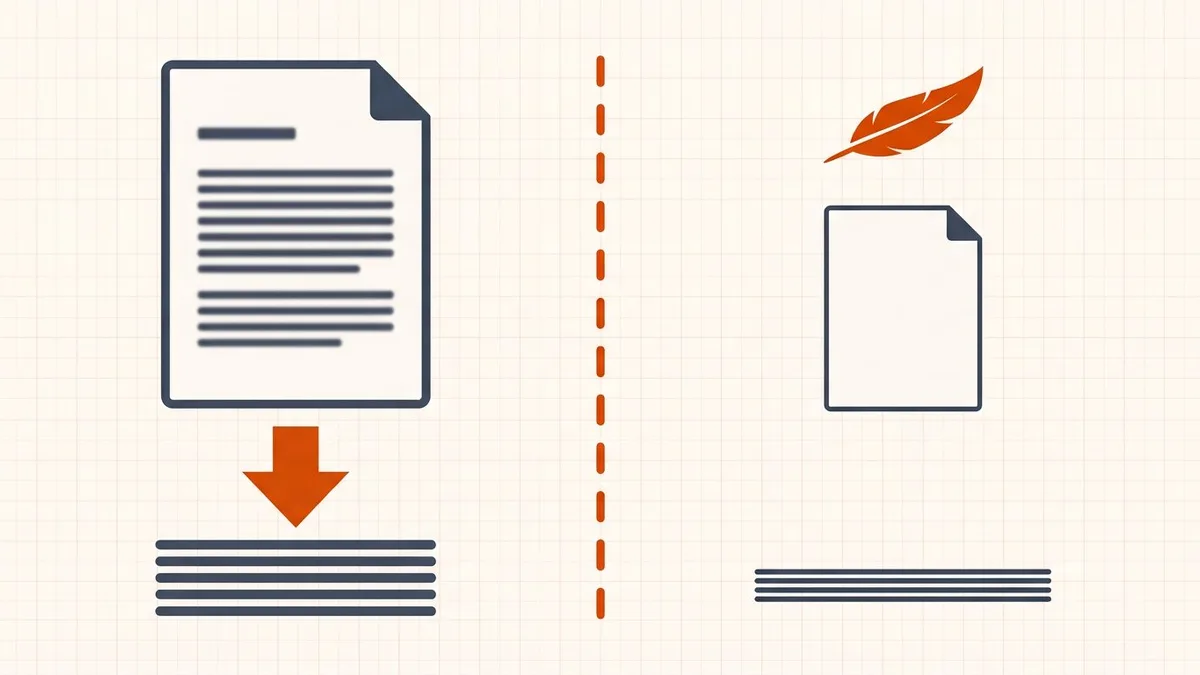
Most tools offer a choice between light, balanced, and aggressive. The right one depends on what the document is for, not on how much you want to save.
| Situation | Level to choose | Reason |
|---|---|---|
| The file is only slightly over a limit | Lightest | You need a small win, not maximum reduction |
| Email or messaging to a known recipient | Balanced | Readable on screen is the bar |
| A portal with a hard cap | Balanced, then step down | Stop as soon as you are under |
| Archival master or print output | Do not compress | The original is the deliverable |
| Scans that must stay legible | Lightest that fits | Small text degrades first |
The general rule: use the least aggressive setting that meets your actual requirement. Over-compressing to save space nobody asked you to save is the most common mistake, and it is the one you cannot undo if you overwrote the original.
What BytesPDF changes
BytesPDF looks for supported embedded images and can re-encode them with a selected quality preset. It also rewrites the document and clears common descriptive and XMP metadata. It does not run OCR, subset fonts, certify PDF/A, or promise forensic sanitization.
That distinction matters. A born-digital paragraph remains vector text, while a scanned paragraph is pixels. The scan can become less crisp even when the words still look like text on the page.
A careful step-by-step workflow
- Open Compress PDF and select one local PDF.
- Start with the moderate preset. Use a stronger preset only if the result still misses the recipient's limit.
- Download the result under a new name so it cannot be confused with the master.
- Compare file sizes. If BytesPDF cannot create a smaller version, it returns the source rather than presenting a larger rewrite as a success.
- Open the downloaded copy and perform the checks below.
Reduce it right here — the compressor loads on click, and your PDF never leaves this browser.
Open Compress PDF →Check the output
| Check | What to inspect |
|---|---|
| Pages | Count, order, orientation, crop, and blank pages. |
| Legibility | Small text, scans, stamps, signatures drawn on paper, and fine lines at useful zoom. |
| Interaction | Search, copy, links, bookmarks, forms, and attachments if the workflow depends on them. |
| Recipient rules | File size, extension, filename, and any portal validation message. |
When not to compress
Do not rewrite an archival master merely to save storage, and do not use a compressed copy where a print provider, court, records office, or other recipient asks for the original or a validated standard. For signed, encrypted, accessibility-critical, form-heavy, or PDF/A-controlled files, use the approved specialist workflow.
Frequently asked questions
Can I reduce PDF size without changing quality?
Sometimes a PDF can be rewritten more efficiently, but meaningful savings often require changing embedded images. Born-digital vector text is not rasterized by BytesPDF; scans are images and can soften. Compare the result with the original.
How much smaller will my PDF become?
There is no reliable percentage for every PDF. Image-heavy files often have more room to shrink, while text-only, previously optimized, or unsupported image formats may change little. BytesPDF returns the original when its generated version is not smaller.
Can I compress a PDF on a phone?
Yes, in a current mobile browser, subject to a 50 MB input limit and available memory. A large scan can still exceed what a particular phone or browser tab can process reliably.
Does BytesPDF upload the PDF?
No. The selected PDF is processed in browser workers and its content is not sent to BytesPDF servers. Working blobs stay in tab memory; account, consent, newsletter, contact, analytics, and error data are separate services described in the privacy policy.
Should I delete the original after compression?
Not for important records. Keep the original as the master, save the compressed file as a separate distribution copy, and inspect it in the viewer your recipient is likely to use.
Related comparisons
Source-led comparisons written by BytesPDF, with the conflict of interest disclosed on each page. They link official provider documentation rather than fabricated tests.